In today’s digital age, your community is flooded with content. From the living room TV to the smartphone screen, parents and stakeholders are constantly scrolling and changing channels. If a school district wants to capture attention for an enrollment push or a capital bond measure, a basic slideshow of photos simply won’t cut it.
As a video editor, my job isn’t just cutting clips together. It’s anticipating exactly how a community will receive a message and crafting a visual narrative that leaves a lasting impact. When we produce a campaign, we are engineering an emotional response that drives a specific action. Here is how strategic video production transforms district communications.

Why Strategic Video Matters for School Districts
School districts have important stories to tell, but those stories often compete with everything else in a person’s day. Parents are busy, community members are distracted, voters may not understand the full picture, and staff candidates may not know what makes your district a great place to work.
Video helps bring the message to life quickly. A strong video can show the energy of a classroom, the care of a teacher, the pride of a student, or the real need behind a funding measure in a way that words alone often cannot. That’s why video should not be treated as an extra in district marketing. It should be part of the strategy.
1. Emotional Connection Over Information Overload
When asking stakeholders to support a tax initiative, districts often make the mistake of leading with spreadsheets, tax rates, and architectural blueprints. While transparency is vital, numbers don’t inspire people—stories do. We design videos that show the real-world impact of those funds on students’ daily lives. We capture the joy of a modern classroom, the safety of a secure campus, and the dedication of the teaching staff. When the community feels the impact visually, they are much more likely to pledge their support.
2. Simplifying the Complex with Motion Graphics
How do you explain the intricacies of per-pupil funding, boundary changes, or specialized curriculum in a 30-second window? This is where motion graphics shine. By turning complex district data into easily digestible, highly visual animations, we ensure that every demographic in your community understands the message clearly and accurately. Motion graphics remove the confusion that often breeds mistrust.
3. Representing the Whole Community
A video only works if the viewer sees themselves in it. We carefully consider representation, tone, and pacing to ensure that whether the video is seen by a prospective parent on Facebook or a local business owner watching broadcast TV, the content feels authentic and welcoming. This means incorporating diverse student voices, ensuring localized cultural relevance, and adding vital accessibility features like closed captions so the message reaches everyone.
4. The Lifecycle of a Video Campaign
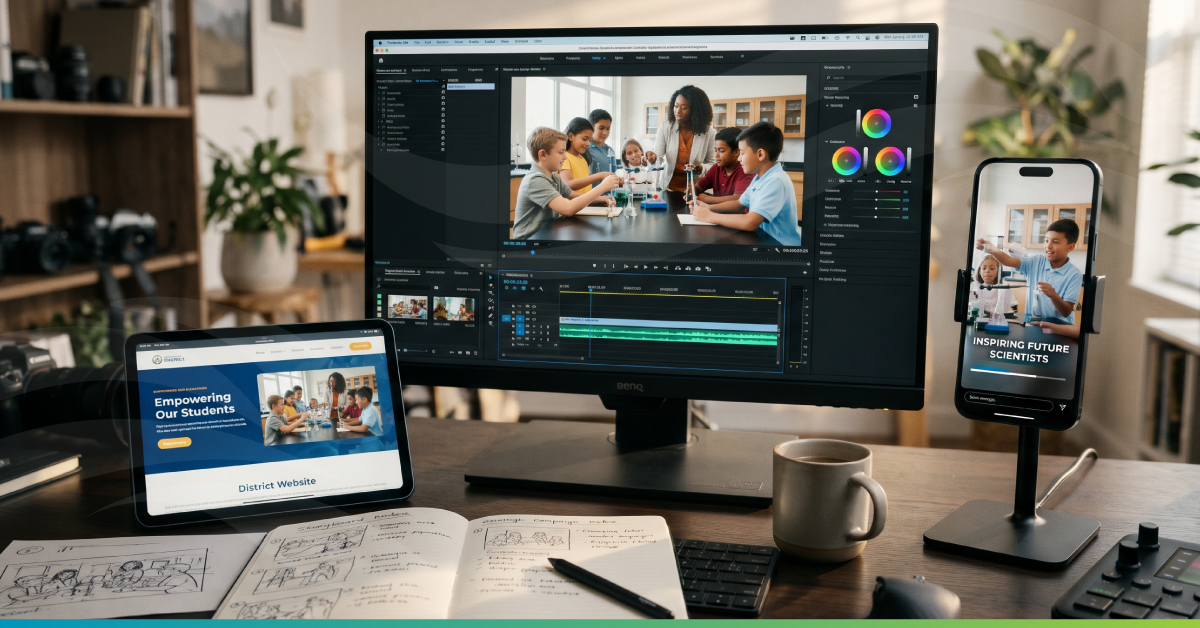
A common mistake districts make is creating one long video and hoping the community watches it from start to finish. We build video ecosystems. A powerful 3-minute “hero” video designed for a community town hall is systematically broken down into 15-second social media reels, 30-second streaming ads, and looping website banners. This multi-platform approach ensures your stakeholders receive the right piece of the story at the right time, improving your return on investment. A great video does more than tell a story, it builds a unified community.
5. Matching the Video to the Goal
Not every video should look or feel the same. An enrollment video should not feel exactly like a bond video. A staff recruitment video should not feel like a general district awareness video.
Before creating any video, the first question should be: What do we want this video to help people do? For example:
Enrollment Videos: These should help families picture their child in the district. The tone should feel welcoming, clear, and reassuring. Parents should understand what makes the schools a strong choice.
Bond or Tax Initiative Videos: These should build trust and explain the need clearly. The visuals should help people understand the “why” behind the ask and how the investment will benefit students and the community.
Staff Recruitment Videos: These should show what it feels like to work in the district. Candidates should get a sense of the culture, mission, team, and impact they can have.
Community Trust Videos: These should highlight district progress, student success, staff dedication, and the work happening behind the scenes. The goal is to strengthen confidence over time.
When the video has a clear purpose, every editing decision becomes stronger. The pacing, music, visuals, graphics, voiceover, and call to action all work together.
Key Takeaways
Strategic video can help school districts communicate more clearly, emotionally, and effectively.
The strongest district videos:
- lead with story, not just information
- make complex topics easier to understand
- represent the community authentically
- work across multiple platforms
- connect every creative decision to a real goal
- make the next step clear for the viewer
A great video does more than tell a story. It helps build trust, create understanding, and move people to action.
Final Thoughts
School districts have stories worth telling. But in a crowded digital world, the way those stories are told matters.
A strong video should not feel like a collection of clips. It should feel intentional. It should guide the viewer, build emotion, explain what matters, and make the next step easier to take. Whether the goal is enrollment, bond support, staff recruitment, or community trust, strategic video can help your district move the needle.
At Target River, we help school systems turn important messages into visual stories their communities can see, understand, and remember. If your district is ready to tell a story your community will not forget, let’s talk.
Contact our team today!
Frequently Asked Questions
How can video help school districts build community trust?
Video helps people see the real people, programs, and impact behind district decisions. When done strategically, it can make district communication feel more human, transparent, and easier to understand.
What types of videos should school districts create?
School districts can use videos for enrollment campaigns, bond and tax initiatives, staff recruitment, district awareness, student stories, program highlights, event promotion, and community updates.
Why are motion graphics useful for school communication?
Motion graphics help simplify complex topics like budgets, funding, timelines, boundaries, and capital projects. They make information easier to follow and can reduce confusion for stakeholders.
How long should a school district video be?
It depends on the platform and goal. A main story video may be two to three minutes, while social media, streaming, and ad placements often work better with shorter 15- to 30-second versions.
Can one video be used across multiple platforms?
Yes, but it should be adapted. A long video can be broken into shorter clips for social media, streaming ads, email, landing pages, and website banners. This helps the district get more value from the same story.